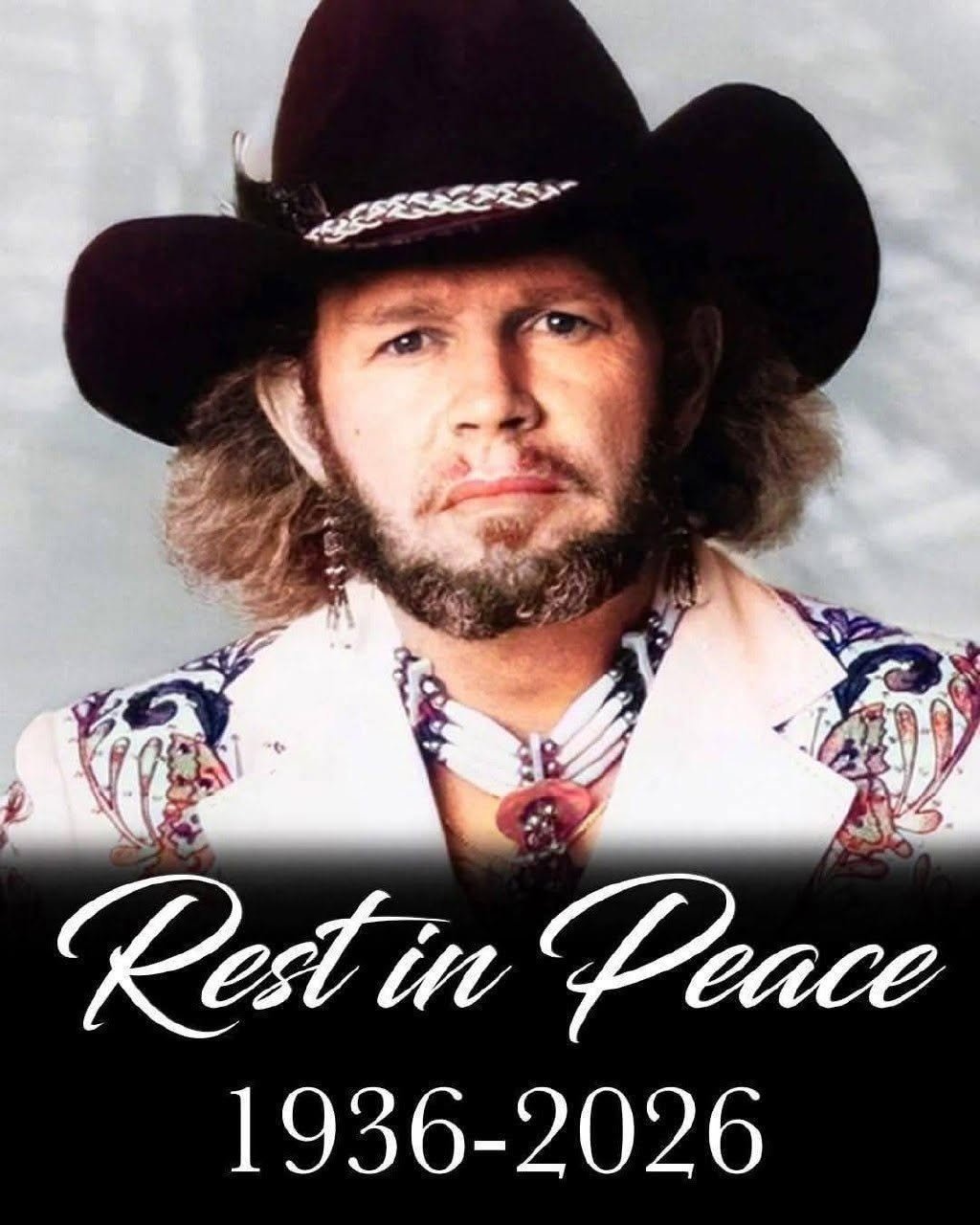
The Man Who Wrote “Take This Job and Shove It”
Even people unfamiliar with David Allan Coe’s recordings may recognize one of his most famous compositions.
Coe wrote “Take This Job and Shove It,” which became an enormous hit for Johnny Paycheck in the late 1970s.
The song captured working-class frustration so effectively that its title became a widely recognized expression in American popular culture.
It remains one of Coe’s most important songwriting achievements.
He Also Wrote a Major Tanya Tucker Hit
Coe wrote “Would You Lay With Me (in a Field of Stone),” which became a No. 1 country hit for Tanya Tucker.
The success helped demonstrate that Coe was much more than an eccentric performer with an outlaw image.
He could write songs capable of becoming major commercial successes when placed in the hands of other performers.
His Connection to “Tennessee Whiskey”
Coe also holds an important place in the history of another song that eventually became a modern country standard.
He was the first country singer to record “Tennessee Whiskey,” written by Dean Dillon and Linda Hargrove.
George Jones later recorded his own celebrated version, and decades afterward Chris Stapleton transformed the song into an enormous crossover hit.
Although Coe did not write “Tennessee Whiskey,” his early recording remains an interesting part of the song’s long history.
A Central Figure in Outlaw Country
During the 1970s, country music was undergoing a transformation.
Artists associated with the outlaw country movement challenged the highly controlled Nashville establishment and pushed for greater artistic independence.
Names such as Willie Nelson and Waylon Jennings became closely associated with the movement, while Coe occupied his own unusual position within the same rebellious musical world.
His long hair, tattoos, unconventional clothing and aggressive independence made him one of the genre’s most recognizable outsiders.
A Complicated and Controversial Legacy
Any complete account of David Allan Coe’s career must also acknowledge its controversies.
Coe released material outside his mainstream catalog containing racist, homophobic and sexually explicit language. Those recordings have remained a serious and controversial part of discussions about his legacy.
Coe later expressed regret about aspects of those releases and maintained that some of the material had been intended for a limited audience, but criticism surrounding the songs continued throughout his life.
His biography was also surrounded by stories that were sometimes exaggerated, disputed or impossible to independently confirm.
As a result, Coe remains one of the most complicated personalities associated with outlaw country.
Collaborations Beyond Traditional Country
Coe’s musical interests extended beyond conventional country music.
He collaborated with musicians connected to the heavy metal band Pantera on the project Rebel Meets Rebel, which combined elements of outlaw country and heavy metal.
The unusual collaboration made sense for an artist whose career had always been built around refusing to fit neatly into one category.
Health Problems During His Later Years
Coe experienced several health difficulties as he grew older.
In 2021, he was hospitalized after contracting COVID-19 and experiencing low oxygen levels. He later recovered sufficiently to leave the hospital, although reports indicated that he continued dealing with health challenges.
His public appearances became less frequent during his later years.
When his was announced in April 2026, reports stated that he had died while in intensive care, but an exact cause was not immediately made public
Tributes After His
Following the announcement, musicians and fans began remembering Coe’s enormous and complicated career.
Kid Rock, who had spent time touring and writing with Coe, remembered him as a deep thinker and someone whose private personality could be different from the outlaw image familiar to audiences.
Other tributes focused on Coe’s songwriting ability and the influence his music had across generations.
A Career That Lasted for Decades
David Allan Coe’s career cannot be reduced to a handful of famous songs.
He recorded numerous albums, performed for generations of audiences, wrote songs for other performers and became one of the most recognizable personalities associated with outlaw country.
His career crossed musical boundaries and survived enormous changes within the country music industry.
Even listeners who disagreed with parts of his persona or controversial material could recognize the influence of songs he wrote or recorded.
Why His Songs Endured
At his best, Coe understood something fundamental about country songwriting: memorable stories matter.
His songs dealt with outsiders, workers, heartbreak, rebellion, regret and characters living far outside polished society.
That storytelling helped recordings such as “The Ride” remain familiar decades after their original release.
Meanwhile, songs he wrote for other performers became part of country music history in their own right.
Remembering David Allan Coe
David Allan Coe died at 86 after living a life that often seemed as unpredictable as the characters in country songs.
From a troubled youth and years behind bars to Nashville songwriting success and decades onstage, his journey was unlike that of almost any other major country performer.
His legacy will remain complicated because of the controversies attached to his career. At the same time, his influence as a songwriter and outlaw country performer remains an important part of the genre’s history.
For longtime fans, songs such as “The Ride,” “Mona Lisa Lost Her Smile” and “You Never Even Called Me by My Name” will continue to evoke the unmistakable voice and personality of David Allan Coe.
The outlaw country icon is gone, but the songs that made him famous remain part of America’s country music story.
For Complete Cooking STEPS Please Head On Over To Next Page Or Open button (>)

Chef’s Clever Hack for Perfectly Peeled Hard-Boiled Eggs

Meat Is Not as Delicious as Cabbage

Creamy Mushroom Soup

Portuguese Linguiça and Cabbage Soup

Crunchy Chicken Taco Salad